


|
Quantity
|
Total
|
||
|
|
|||
|
|
|||
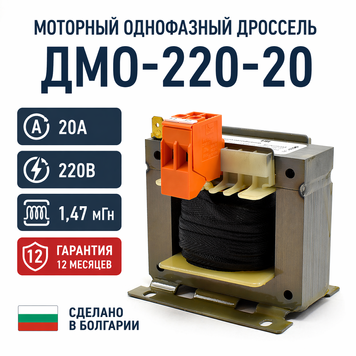
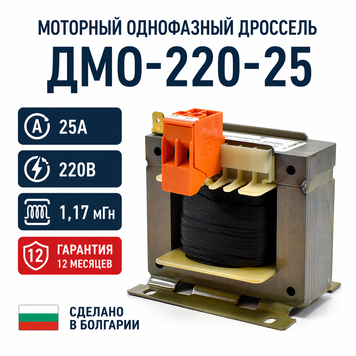
Single-Phase Motor Chokes: Reliable Protection for Your Drive System
Single-phase motor chokes (output reactors) are critical components of industrial electric drive systems, installed between the output of a frequency converter (VFD) and the electric motor. Their primary purpose is to compensate for the adverse effects that occur when transmitting a PWM (Pulse Width Modulation) signal over a motor cable.
Why do you need motor chokes?
When long cables are used between the converter and the motor, parasitic capacitance occurs. Combined with the high switching frequency of the power transistors (IGBTs), this leads to a series of issues that a motor choke resolves:
- Reduction of capacitive leakage currents: The choke prevents overload on the frequency converter's output, allowing it to supply the nominal current directly to the load without tripping.
- Voltage rise rate (dV/dt) limitation: It protects the motor winding insulation from breakdown and premature aging by smoothing out voltage peaks.
- Electromagnetic Interference (EMI) suppression: It significantly reduces the level of EMI radiated by the cable, both on the motor side and towards the power supply network.
When are they necessary?
Leading manufacturers of frequency converters highly recommend or mandate the installation of motor chokes if the motor cable length exceeds 20–50 meters (depending on the specific model and drive power).
In special cases where protection for a high-power three-phase drive is required, three separate single-phase motor chokes can be used instead of one three-phase unit. This provides design and installation flexibility in restricted electrical panel spaces.