Shunting locomotives, such as the legendary TEM2, ChME3, or the more modern TEM18DM, are the true workhorses of the railways. We are used to admiring the power of their massive diesel engines and the roar of their traction generators, but behind the scenes of this power lies a whole army of auxiliary systems. It is these systems that provide the locomotive with compressed air, cool the equipment, and pump the fuel.
The main driving force behind these systems are the auxiliary direct current (DC) electric motors. Today, we will break down the two most common series of such machines: the classic P (П) series motors and the more modern 4PN (4ПН) series.
Why Does a Shunting Locomotive Need Auxiliary Motors?
Unlike traction electric motors (TEMs), which directly rotate the wheelsets and move the train, auxiliary machines perform the life-support work for the locomotive itself.
Within the onboard network of shunting locomotives (usually 75 or 110 V DC), the P and 4PN series electric motors are responsible for the following critically important tasks:
-
Driving brake compressors: Providing the locomotive and the entire attached train with compressed air for the brake lines and pneumatic contactors.
-
Cooling equipment: Rotating the heavy fans that cool the traction electric motors, rectifier units, and the diesel engine itself.
-
Fluid circulation: Operating the oil, water, and fuel priming pumps.
-
Excitation: Acting as auxiliary generators and exciters for the main generator.
Series P: A Time-Tested Classic
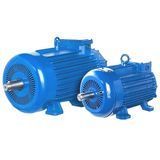
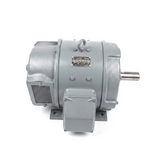
The P series electric motors (e.g., P11, P21, P41, P-52, etc.) are standard industrial DC machines developed in the middle of the last century. Despite the considerable age of their design, thanks to their phenomenal endurance, they are still massively operated to this day.
Design Features
P series motors are distinguished by their massive, "indestructible" cast iron or thick-walled steel housing. Depending on the task, they feature different types of excitation. For driving pumps, where a stable rotational speed is needed, parallel-excitation motors are used; for compressors, mixed-excitation motors are used to provide high starting torque and overcome the resistance of compressed air.
Main advantages of the P series:
-
Absolute maintainability: The simplicity of the design allows for armatures to be rewound and units to be serviced right in an ordinary locomotive depot.
-
Resistance to overloads: They can withstand short-term voltage surges and very harsh starting conditions.
-
Ruggedness: They perfectly tolerate the constant vibrations and shaking from the operation of a heavy diesel engine.
Series 4PN: The Evolution of Power and Compactness
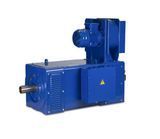
The 4PN series motors (e.g., 4PN200, 4PN225) represent the fourth generation of DC machines. They replaced older, bulky models by offering improved characteristics. On locomotives, they are used in the most energy-intensive units.
What Does the Abbreviation Mean?
-
4 — Fourth series (generation);
-
P (П) — Direct current (DC) machine;
-
N (Н) — Protected execution with natural air ventilation.
What Changed Compared to the P Series?
The 4PN series utilizes more modern insulating materials (thermal class F or H), which significantly reduced the dimensions of the motor while maintaining the same power output.
Key improvements:
-
Increased efficiency: A more effective electromagnetic system significantly reduced energy losses.
-
Weight reduction: The use of high-quality electrical steel made the units lighter, which is critical for the tight layout inside the cramped locomotive body.
-
Improved commutation: Optimized geometry of the commutating poles drastically reduced sparking on the commutator, thereby extending the service life of the brushes.
Maintenance: The Secret to Longevity on the Rails
Any DC electric motor has one "weak link" — the commutator-brush assembly. On shunting locomotives, where working conditions are far from ideal (constant vibration, temperature fluctuations from -50°C to +40°C, dust, and humidity), the maintenance of this assembly takes center stage.
Basic maintenance rules known by every machinist and mechanic:
-
Brush control: Timely replacement of the graphite brushes and checking their spring pressure prevents the copper plates of the commutator from burning out.
-
Fighting dust: Copper-graphite dust from the brushes can cause flashovers (short circuits) across the commutator. The internal part of the motors must be regularly inspected and blown out with dry compressed air.
-
Alignment: The alignment of the shafts of the electric motor and the driven unit must be perfect; otherwise, the bearings will be quickly destroyed by vibration.
Conclusion
The P and 4PN series electric motors may not be the most high-tech components of a modern locomotive, but the entire "ecosystem" of a shunting locomotive rests on their shoulders. The transition from the heavyweight P series to the more compact and energy-efficient 4PN series perfectly reflects the evolution in mechanical engineering: a drive toward modern standards without losing legendary railway reliability.
Without their quiet but steady hum in the engine room, no heavy train would ever move an inch!