A Second Life for Your Equipment: Selection, Replacement, and Manufacturing of Analogues for Electric Motors and Tachogenerators
Production line downtime due to a failed electric motor is a nightmare for any engineer or business owner. The situation worsens if the burnt-out unit or tachogenerator has long been discontinued, and original spare parts either cost astronomical amounts or are unavailable due to disrupted supply chains.
But there are no hopeless situations. In this article, we will analyze how to properly approach the selection of analogues, replacement, and even custom manufacturing of electric motors and tachogenerators to get your equipment back up and running with minimal downtime.
Why is the original motor not always the best choice?
Many are used to looking for an exact "one-to-one" match. However, in today's reality, this is often impractical:
-
Outdated technologies: Old motors (especially DC ones) require complex maintenance and lose out to modern analogues in energy efficiency.
-
Delivery times: Waiting for an imported original can take anywhere from a few months to half a year.
-
Price: The cost of a unique part from storage warehouses (NOS — New Old Stock) can be unjustifiably high.
That is why competent engineering, aimed at selecting or adapting a modern analogue, is becoming the standard in the industry.
The Art of Selection: What to look for when replacing an electric motor?
Selecting an analogue is not just about finding a motor with the same power. It is a complex engineering task. Here are the key parameters that must be considered:
-
Electrical characteristics:
-
Power (kW) and nominal current.
-
Rotational speed (RPM).
-
Voltage and connection scheme (star/delta).
-
Operating mode (S1 — continuous, S2 — short-time, S3, etc.).
-
-
Mechanical and mounting dimensions:
-
Shaft diameter and length.
-
Mounting type (foot-mounted, flange-mounted, combined).
-
Axis of rotation height (frame size).
-
-
Operating conditions:
-
Ingress Protection (IP) rating — resistance to dust and moisture.
-
Insulation class and climatic design (for operation in heat, cold, or aggressive environments).
-
Important nuance: If there is no perfect match in dimensions, the problem is solved by manufacturing adapter plates, adapter flanges, or couplings. Modern CNC machines allow for turning an adapter of any complexity in a couple of days.
Tachogenerators: A small part with great responsibility
Tachogenerators are sensors that convert the rotational speed of a shaft into an electrical signal. They are the "eyes" of the control system in DC and AC drives.
Difficulties when replacing a tachogenerator:
-
Output voltage gradient: This is the main parameter (for example, 20 mV/RPM). If the new tachogenerator outputs a different voltage at the same RPM, the control system will not function correctly.
-
Mounting points: Often, tachogenerators are integrated directly into the motor housing or have a specific hollow shaft.
How the problem is solved:
If finding an exact analogue is impossible, there are two paths:
-
Selecting a tachogenerator with similar characteristics and reconfiguring (calibrating) the equipment's drive.
-
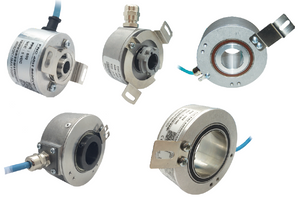
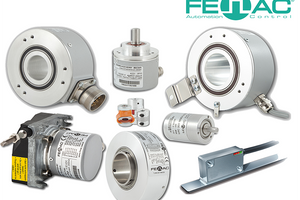
Modernizing the assembly by replacing the obsolete analog tachogenerator with a modern digital encoder (pulse speed sensor). This requires intervening in the control system but radically improves the accuracy and reliability of the system.
Manufacturing analogues: When standard solutions don't work
There are cases when selecting a serial motor is impossible. For example, highly specialized spindle motors, motors for non-standard machine tools, or special equipment. In this case, reverse engineering and customization come to the rescue.
What can modern engineering centers do?
-
Shaft modification: Lengthening, changing the diameter, cutting new keyways or splines on a standard motor.
-
Replacing end shields and flanges: Manufacturing new housing parts to ensure the required mounting dimensions.
-
Stator rewinding and changing characteristics: Based on standard "hardware," a motor can be wound with a non-standard voltage, or its speed characteristics can be altered.
-
Creating a motor from scratch: In rare cases, when absolute compliance with unique drawings is required, small-scale or one-off production of the stator, rotor, and housing is possible.
Summing up
The breakdown of a rare or discontinued electric motor is not a reason to write off the equipment as scrap. The industrial engineering market has taken a huge step forward.
Competent analogue selection, the use of adapter elements, or individual modification of standard motors allow not only for restoring the functionality of machine tools and lines but also often improving their characteristics, making the drive more reliable, energy-efficient, and easier to maintain in the future.